5 August
Camera
Leica M10 Monochrom
Lens
28mm Elmarit m v3
CameraLeica M10 MonochromLens28mm Elmarit m v328mm
Intent
Behind the frame
- What I was trying to do:
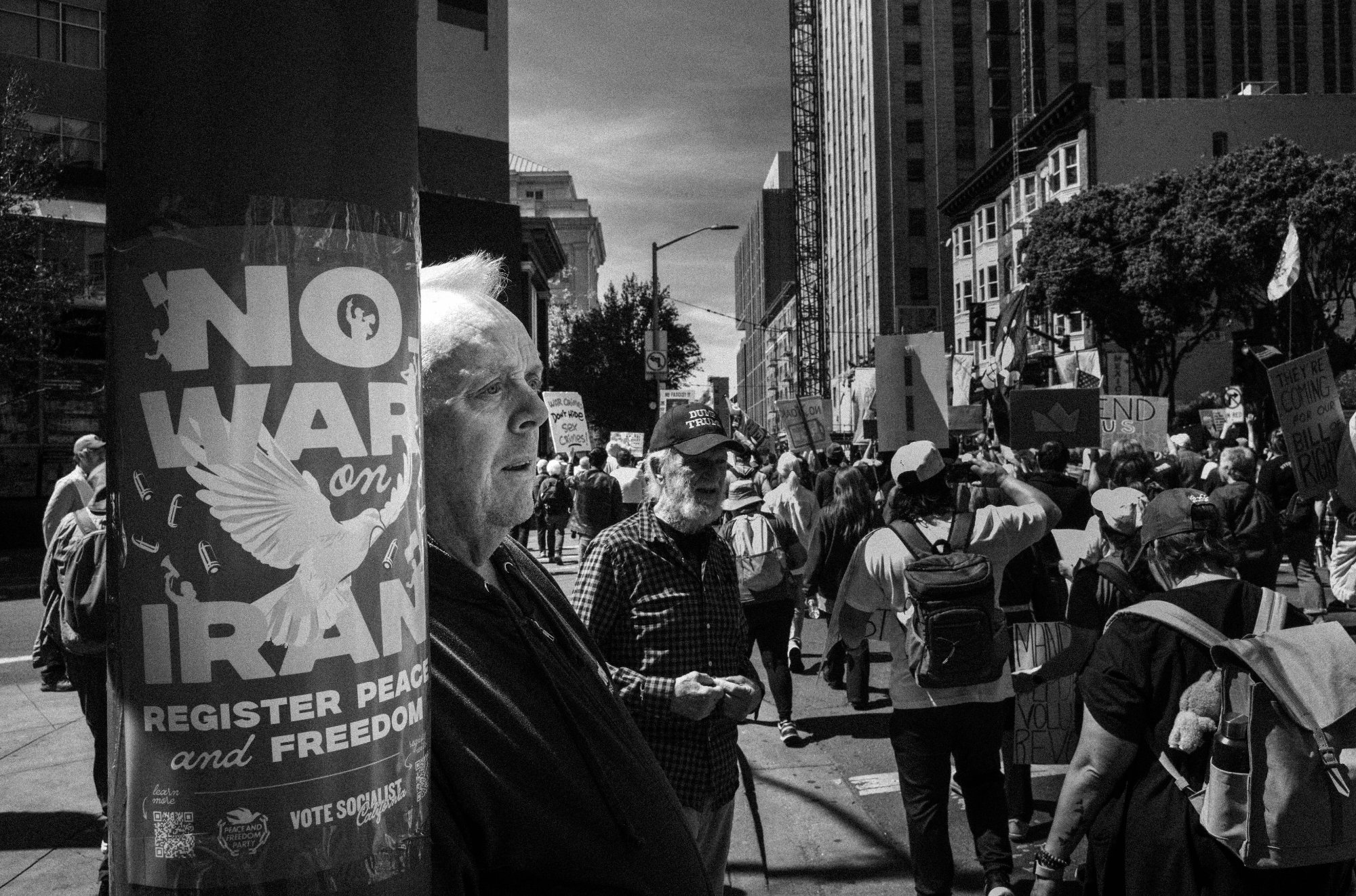
- What makes this photograph work for me is that the protest itself isn’t necessarily the main subject. It’s what happens around it. Whenever I document protests, I’m interested in more than the usual participants holding signs or chanting. I look for the spectators who just want to observe, the clueless pedestrians who happen to walk into it, the flyers being handed out or pasted onto walls, and all the little ways an event like this temporarily changes the rhythm of an ordinary day. That’s why I focused on the gentleman in the foreground. He doesn’t appear to be participating at all. He simply wants to cross the street. But the protesters have taken over the roadway, so now he has to stand there and wait. Meanwhile, the huge “NO WAR on IRAN” poster beside him and all the signs, people, and gestures behind him tell you exactly what has interrupted his day. I like that contrast between someone going about his normal routine and this massive political event happening around him.
- What worked:
- A lot worked here, especially because the photograph rewards looking beyond the obvious protest. The strongest element is the relationship between the gentleman and the “NO WAR on IRAN” poster. His face emerges right beside this huge political message, but he appears completely disconnected from it. That juxtaposition immediately creates a story. He looks like someone whose normal day has simply collided with this event. The layering is also very strong. You have the poster and pedestrian in the foreground, the older man and other individuals in the middle, then the dense protest filling the street and disappearing into the background. Your eye can move through the entire photograph and keep finding information. The light helps tremendously. The gentleman’s face and white hair catch the sunlight while much of his body and the poster sit in deeper tones. That separation makes him the human anchor despite everything happening behind him. I also like the visual density without complete chaos. There are signs, faces, hands, backpacks, buildings, trees, flyers, and fragments of text everywhere, but the foreground gives you somewhere to start. After you notice him, you naturally begin exploring everything else.
Response
Community feedback
Members can leave feedback on every submission. Join Framelines to take part.
Join Framelines